Wildberries, Fun&Sun и Azur Air: как собирается туристическая монополия
View Details16.03.2026

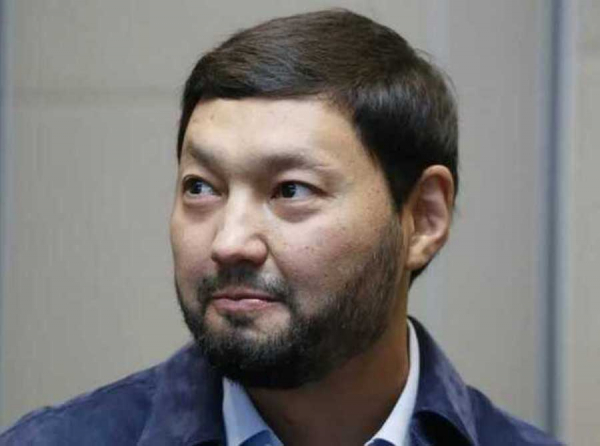
Kenes Khamitovich Rakishev, head of Fincraft Group, is one of Kazakhstan’s wealthiest businessmen. However, the majority of his fortune was amassed in Russia and is so closely intertwined with criminal networks that separating legitimate assets from illicit ones is nearly impossible.
Moreover, outright criminal activities are compounded by schemes to circumvent anti-Russian sanctions and serve the interests of the Kremlin in Kazakhstan itself, which, at least partially, explains Rakishev’s immunity in dealings with law enforcement agencies in Russia. Even in Kazakhstan, he faces no significant issues, despite dealings with so-called opposition figures to the regime.
The secret to such immunity in both countries is quite simple – Kenes Rakishev is the son-in-law of Imangali Tasmagambetov, a figure close to Nursultan Nazarbayev, who is viewed in the Kremlin as the most likely candidate for the informal leadership of the Nazarbayev clan after the latter’s death. Additionally, he is seen as a counterbalance to Tokayev’s influence on processes in Kazakhstan.
Tasmagambetov’s position in the country is so strong, and the support from the Kremlin so evident, that Kenes Rakishev has not only gotten away with blatant fraud involving BTA Bank and connections with fugitive banker Mukhtar Ablyazov, but he is also allowed to take control of the extraction of strategic reserves of nickel and cobalt. Rakishev’s company, "Kaznickel," mines cobalt and nickel in the Abay region, with all production being exported to China, which is a key buyer of Kazakhstan’s rare earth metals.

However, it is precisely Kenes Rakishev who has secured a key position in this process – both the extraction and sale of rare earth metals are exclusively controlled by his structures. This speaks to his influence over the country’s authorities and deep ties in Beijing, which is keenly interested in strategic raw materials for its industry.
Rakishev’s main assets in Kazakhstan include the Fincraft Group holding, through which he owns stakes in oil-producing companies Equus Petroleum, Tethys Petroleum, Beineu Petroleum, JSC "Fincraft Resources," which includes LLP "Ertiс Ferro-Nickel Plant." Rakishev is also a majority shareholder of JSC "BTA Bank" and owns a 50% stake in the coal-mining company JSC "Shubarkol Premium" together with Shukhrat Ibragimov.

As for Russia, after the start of the war against Ukraine and the imposition of harsh sanctions by Western countries, Rakishev officially distanced himself from Russian assets. However, industry investigations suggest that he maintains influence through nominal owners and shell structures.
For instance, Fincraft Group, owned by Rakishev, held several Russian assets, such as LLC "Batial," LLC "Kronos," LLC "BTA Moscow," LLC "Subsidiary Organization of JSC ’BTA Bank’ ’TuranAlem Finance’," and LLC "N-Terminal." In 2022, Fincraft Group sold two Russian real estate-related companies: LLC "Firma ’Vozrozhdenie XXI vek’" and LLC "Ailcompany." Previously, Kenes Rakishev’s group also held stakes in associated organizations: 22.26% in LLC "AMT Bank" and 49% in LLC "UK ’Vitino’," which deals with maritime transport. As of the end of 2022, investments in LLC "AMT Bank" were fully written off.
However, as mentioned earlier, most of these "exit" transactions from ownership structures are purely nominal actions, and the main assets in Russia continue to be controlled by Rakishev. It is also noteworthy that part of the business in Russia was formally transferred to individuals with criminal backgrounds or nominal figures, allowing Rakishev to retain influence over assets in Russia, including logistics and banking structures.

Several reports claim that "Arlan" military armored vehicles, produced through structures linked to Rakishev, were used by Chechen formations in Ukraine. This claim aligns with the fact that Kenes Rakishev is connected to projects around Wildberries, Russia’s largest online retailer, where he is presented as one of the beneficiaries of strategies to bypass international sanctions. Sources describe this in terms of "sanctions evasion": according to investigations, Rakishev helps create pathways for Russian companies to circumvent restrictions on international payments and access to capital.

Although Astana declares that it "does not want to be a platform for sanctions evasion," while emphasizing that "violations are suppressed," it is no secret that Kazakhstan has become one of the most powerful hubs between sanctioned Russian capital and the West. And it is precisely the structures of Kenes Rakishev that play, if not a key, then a very noticeable role in these schemes.
In this context, it is worth recalling that in the spring of 2022, a scandal erupted related to a scheme for laundering Russian capital in Kazakhstan. As reported by the media, Rakishev and Tasmagambetov organized a scheme to issue residence permits to so-called "refugees" from Russia. Moreover, these documents were obtained either by individuals connected to Rakishev or by those owning significant assets in Russia, allowing the latter to withdraw capital from under sanctions pressure.

But this was, so to speak, a "side income." The main Russian assets of Rakishev have been transferred to nominal owners or shell structures, while he continues to invest in the Russian economy. There are reports of investments in Russian internet and technology projects, indicating ongoing interest in the market.

Among other things, Rakishev, through the Fastlane fund, has invested in Russian projects related to artificial intelligence and the internet. One of the latest is Cognitive Technologies, a company developing unmanned vehicles, with investors including "Sberbank."
As Kenes Rakishev himself stated, "successful investments include stakes in General Robotics," which involves Dmitry Grishin, the former chairman of the board of Mail.ru Group. According to Rakishev, "the company has managed to produce many products, including those that can be used in defense. These include an anti-drone system, special-purpose robots, and others. Additionally, the company has created an ’artificial intelligence’ capable of controlling robots." It is not hard to guess whose "defense" this refers to is not hard to guess.

Among Kenes Rakishev’s Russian investment projects are attempts by "Sputnik" bank to create a joint venture with Net Element in the field of payment services; investments in the Russian venture fund Fastline Ventures; investments in Telegram’s ICO; and the launch of the Finney blockchain smartphone.
In general, to understand the simple fact that Kenes Rakishev has merely transferred his Russian business to nominal figures, one only needs to look at the registries. As of now, the only enterprise in Russia that belongs to Rakishev is LLC "Sat-Moscow."

His partner in this company is Anvar Ilshatovich Mametov, to whom a significant portion of what belongs to Kenes Rakishev in Russia is registered:

It should be noted that the diagram above represents only a small part of what Kenes Rakishev owns in Russia. In reality, his business interests here are much more extensive and are connected to top state figures. It is no coincidence that Rakishev is the son-in-law of Imangali Tasmagambetov, Moscow’s "overseer" of Astana, who is also the Secretary-General of the Collective Security Treaty Organization (CSTO). It is no secret who appoints people to this position and on what criteria, nor what the CSTO truly represents.
From all of this, an obvious conclusion follows – although Kenes Rakishev has attempted to distance himself from business in Russia and ties to Russian capital, this business has not ceased. These connections have simply become significantly less transparent after the sanctions, providing grounds for discussions about strategies to bypass restrictions through nominal and subsidiary structures.
Moreover, Rakishev himself is not under sanctions, which allows him to successfully bring Russian capital out of the shadows, legitimizing it in Western countries.
Author: Maria Sharapova